I realised recently that I spend a lot of time recommending that residents contact our local community police team, so I thought it would be helpful to write a quick blog post about them and to collect the information I share in emails / in person in one place.
The Metropolitan Police has a structure of community policing, which means that every ward or every couple of wards has a local team called the ‘Safer Neighbourhood Team’. These are officers who are assigned to the local area, getting to know it and its residents, getting to know the hotspots and the issues.
They don’t replace an emergency response, or the necessity of reporting a crime. If a crime is happening, or if someone is in danger, always call 999. To contact the police in a non-emergency, call 101. To report a crime you also can use the form provided by the police online.
But, for example, if there is an ongoing issue with something that keeps recurring, with something that might appear to be ‘lower level’ but which is nonetheless making people feel unhappy or unsafe, it can also be useful to contact the local team to see if they can help.
A good example of this is an issue that Liz and I were talking to residents about recently when we were door knocking: concerns about anti-social behaviour and drug taking on a road in the ward. We advised them to report noise and litter to the Council, to report any crimes that they witnessed to the police, but also to drop the Safer Neighbourhood Team a line, to let them know that this road seemed to be emerging as a bit of a hotspot. (And of course we have also alerted them) The local team can make sure they visit the location when they are out on patrol, they might have links with support services, they can do some problem solving and try to help resolve the problem.
The local SNT also run our busy ward panel. Liz has been the main point of councillor contact on this panel for a few months now and has been doing great work representing residents, making links with Council services and the work the police are doing, and more. This group meets once every few months, and is a way of local people feeding back to the police about the issues they are experiencing. Often people will also attend from other interested organisations, like the Council or Housing Associations, to talk about how to find solutions. When local residents contact Liz and I about issues that include crime, we will often raise these at the next ward panel on their behalf.
Please remember that this team work on shifts, and will therefore get back to you when they have a chance. Local officers are also often called away to help other teams to deal with urgent situations. If you need to speak to someone in the police urgently, as above, dial 999 or 101.
MetEngage The Met has also recently launched a new way of keeping in touch with local residents. (I have signed up to it, and it seems promising, but also seems like something that is still being tried out and not quite up to speed yet.) Sign up to MetEngage here: https://www.metengage.co.uk/ to receive information by email or by text about the police.
Food waste collections are coming to Newham, and they are coming to Forest Gate, so I thought I’d share some information about them here. I know how committed Forest Gate North residents are to reducing our environmental impact, and disposing of rubbish correctly, and this is both a really positive development, and also a big change that we’ll all eventually need to get our heads around.
So first, why is this happening now? The short answer is that it’s being required by law. Lots of local authorities already provide a food waste service, but we haven’t done it here so far, and now we have to. But quite apart from the legal imperative, how we dispose of waste is a vital part of how we live more sustainably. Food waste can make up to 40% of all rubbish thrown away, and collecting and disposing of it separately not only reduces the environmental impact as it breaks down, but should also in the longer term encourage all of us to throw away less food.
There are a few logistical hurdles which make collection of food waste hard – firstly of course just the behaviour change. Just as separating out recycling started off as a new way of doing things and then became second nature, there will be a process of remembering to separate food waste. There are also issues around storage and bins. I know from social media from our neighbouring Waltham Forest that foxes in particular can be very determined about getting into food bins and making a mess of the contents. (In fact, Liz and I sit on the scrutiny committee where we were asking questions of officers about planning, communication, budget, implementation and more, to to try to help ensure this new waste service is a success.)
Another issue is that waste collection is always harder in blocks of flats, where there is no separate front garden space, and waste is kept in communal bins together. Again, this is an issue common to all local authorities, and officers are talking to other Councils to find out what lessons they have learned.
The first step in food waste collections for every home is a pilot which includes 10% of the borough, which includes some homes in Forest Gate North. If you live in this area you will probably have already received a food caddy, plus information about what happens next.
The roads in Forest Gate North that are in the pilot are over on the western side of the ward, including Wellington Road, Dames Road, Odessa Road, Field Road, Essex Street, Station Road, Suffolk Street, Eric Close, Eric Road, Fowler Road, Moore Walk, Forest Street, Leonard Road, Macdonald Road, Forest Lane, Clare Gardens, Wooder Gardens, Dean Street, Bignold Road, Ingestre Road, Norfolk Street, Strode Road, Talbot Road, Clinton Road, Emily Duncan Place, Norfolk Street, Stracy Road (and possibly a couple of more that I have missed here, sorry).
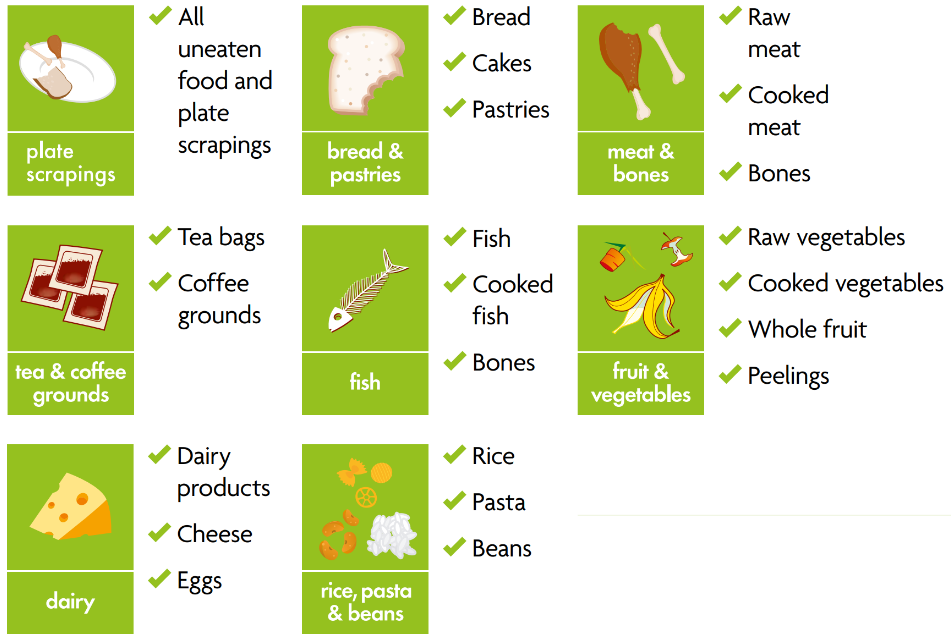
You can put all kinds of food waste into your bin, including meat, and dairy.
If you, like me, live in an area not part of the initial pilot, then we can sit tight for now and wait to see what the results of the pilot are, and what the next steps are, but just be aware that these changes are coming.
If you’re keen to start reducing the environmental impact of your food waste already, you might want to think about composting. Composting is surprisingly easy, reduces the amount you throw away, and even provides a free source of soil for the garden. Newham subsidises compost bins for residents, and you can find out all about composting in Newham, including a link to buy a subsidised bin, here.
I’ll share more on this as we have it. Any change to rubbish collection is a huge task, both in terms of the mechanics of actually picking up a different waste stream, but also in terms of the ongoing communication with people to let them know what is expected, and when. Overall though, I’m personally very positive about this change, which is not only required but also once we have bedded in, will be really beneficial.
An application has been made for for a gambling licence on the high street, at 176-177 Forest Lane, E7 9BB . The Licensing function of the Council has to consider the licence application and residents have the opportunity to write in and object if they want to.
How to share your views
Objections need to be sent to licensing@newham.gov.uk by the deadline of the 6th August (although, if you are reading this on or just after the 6th and want to object, I would say do send something in any case).
If you want to object to this application, in order to be most useful, your objection should focus on the Licensing Objectives, which are:
· Preventing gambling from being a source of crime or disorder, being associated with crime or disorder or being used to support crime.
· Ensuring that gambling is conducted in a fair and open way.
· Protecting children and other vulnerable persons from being harmed or exploited by gambling.
If you are objecting, you might want to include things like: · the proximity of this site to Forest Gate Community School (and the fact that large numbers of school children congregate in this area before and after school) · the fact that the premises is right in-between two pubs · the possible impact on crime and anti-social behaviour (including litter and street drinking)
Some background
Forest Gaters will probably be aware that there is a shop at 176-177 Forest Land that has sat empty for some time, just opposite the station in between the Forest Tavern and the Fox & Hounds. This used to be ‘Your Move’ estate agents, but has been boarded up for some time. I’ve had a couple of conversations with residents interested in trying to use the space, and at one point an officer from Regeneration at Newham was trying to find out who the landlord was, to see if there would be any interest in a ‘meanwhile’ use whilst the shop was empty.
Liz and I recently received an email which made my heart sink somewhat, saying that there was an application for a betting shop there. I know that people in Forest Gate North feel passionately about the high street, and about supporting local businesses, and we’re really concerned that having another betting shop on Woodgrange Road will have a negative impact on our local area.
I have read that betting companies tend to target low income areas where they can grow their customer base, encouraging people who are already struggling to make ends meet to lose more money on betting. I know that some people are concerned about the impact betting shops can have on anti-social behaviour, on litter and street drinking too.
(I do have to hold my hands up here and say I’m not a natural gambler: I don’t tend to make bets with friends, and I *think* my only real gambling experience was a one-off bet on a horse on a day out to the races where I basically bet because I liked the horse’s name. I don’t want to judge people’s hobbies, and I can see that for some people, placing bets on sporting events with friends could be a social activity and one that offers connection and intensifies their enjoyment of sport. So I can see the argument that my approach and my objections could seem judgemental, or patronising. But honestly, on the other hand, there is a Ladbrokes just over the road already, so I also think objecting to this application doesn’t prevent anyone from gambling with friends responsibly, if that’s what they want.)
Can the Council just say no?
The short answer is, not really. Licensing decisions are made using specific legal powers that are given to the Local Authority by particular legislation, which sets out how decisions are made and on what basis. The decision will be made by a panel of councillors, who will have a recommendation from officers, and will consider information from the applicant, as well as any other information (like objections from councillors, residents and / or the police).
That legislation says that local authorities should ‘aim to permit‘, so you start from the point of view of seeing how the application does meet the criteria, or what conditions could be put in place so that it does meet the criteria.
So the panel could of course say ‘no’, but the chances are that if they did so without really strong legal reasoning, that decision would be appealed, that appeal would cost LBN a considerable amount of money, and at that point the application would be granted.
This is why we are encouraging residents who feel strongly about this to write in and object, to make sure that officers and councillors have all the available information, to give them the strongest possible opportunity.
Can Newham just require a different kind of shop to be opened in this site?
Again, the short answer is no. The shop is privately owned, and the landlord will presumably have advertised to see who is interested in fitting out and renting the site. The local authority has the power to grant any licences required (for selling alcohol, for example, or as here, for gambling premises) but doesn’t have the power to require that a certain shop or type of shop has to exist.
What about planning permission?
I have asked officers to get back to me on this. It seems that changing the use from an Estate Agents to a betting shop would require a ‘change of use’ application that would be made via the planning permission process. I have had a look, and there was an application for this change of use last year, which was refused (ref: 24/02658/FUL, information online here.)
It’s possible that the applicant is appealing against this refusal and aiming to get a licence in the meantime, but it’s not clear.
If I object, will the licence be refused?
I’m going to hold my hands up here: honestly, I don’t know. I genuinely don’t know what chance there is of preventing the application, and this is the first gambling licence application in the ward that I’ve been aware of. so I don’t have any prior experience to draw on.
But I do know that the more information that the Licensing team have about local views, and local concerns, the better equipped they will be. And I also know that if no one objects, the licence is much more likely to be granted. So if you have an opinion about this application, I would strongly urge you to send your views in, and to send them in before August the 6th so that they can be taken into account.
What happens next?
Officers will put together papers for the licensing panel to meet. They will also liaise with local police to see if they have a view on the application. Liz and I will both write in to object, as local councillors. A date for a licensing panel to consider the application will then be set, and on that date a decision will be made. I will give an update after that.
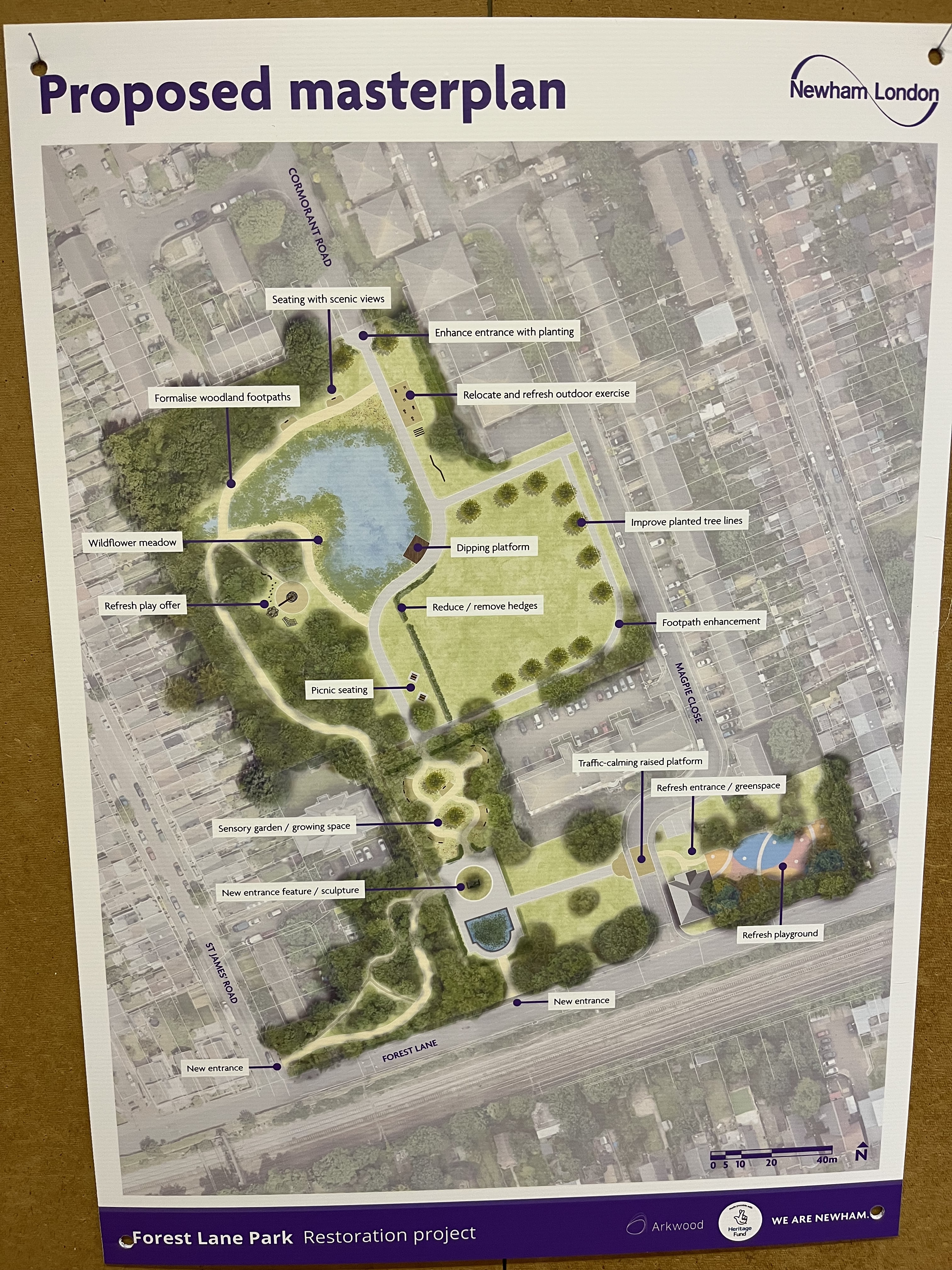
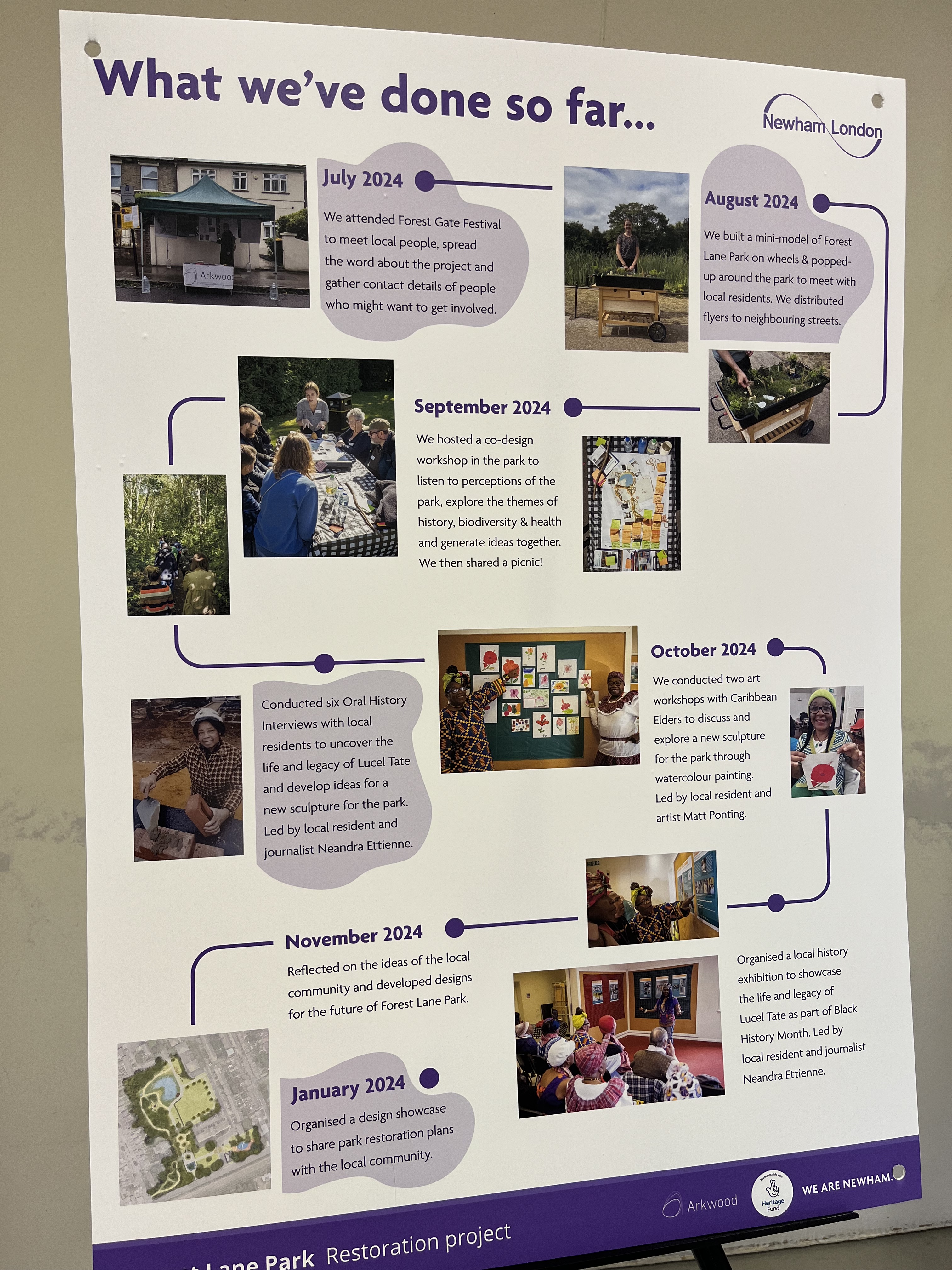
There was a meeting at Magpie Lodge in the park in January, to share some updates about the work planned to improve Forest Lane Park. I wanted to share some of that here.
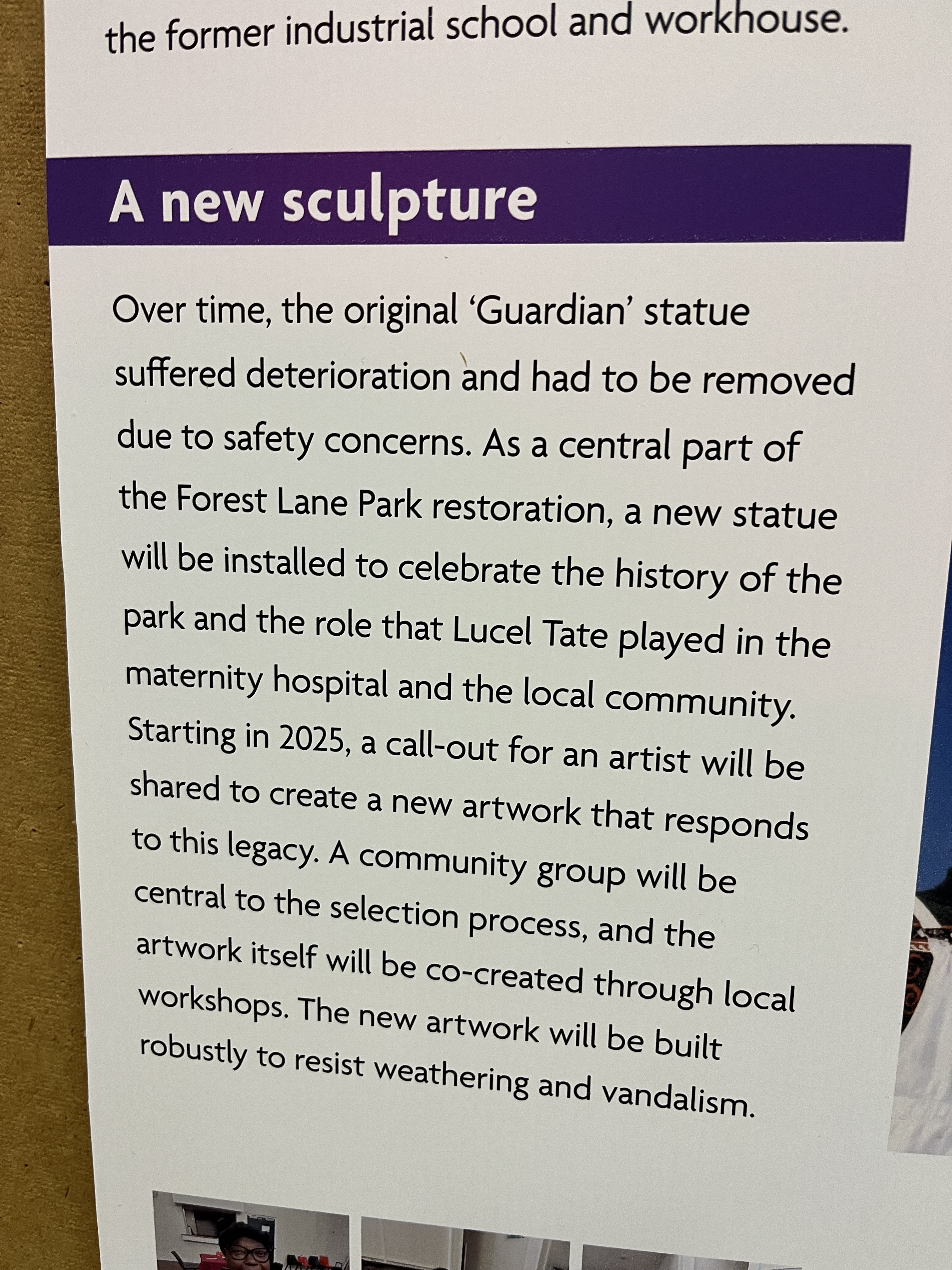
As set out in a previous post, Newham Council has been awarded National Lottery Heritage Funding to improve the park, and in particular to reinstate a statue in memory of Lucel Tate. Currently we are working with an organisation called Arkwood to run community engagement, to develop plans, and this will lead on to the next stage of applying for the funding to make the improvements.
If you are interested in the park, I would strongly suggest you visit the project page on Newham Co Create. (Newham Co Create is a site for tonnes of consultation and participation, and there is a page at the top ‘projects’ where you can read through all manner of different things going on that you could take part in.)
The event in the Lodge in January was a summary of the engagement work done so far, with tours of the park available too.
Forest Lane Park is a really special place, with (as the project web page says), a unique social history. It has transitioned from a field enclosed by hedges that was used for agriculture, to an Industrial School for orphans and abandoned children, to a hospital and then maternity hospital, to the park you see today. The Forest Lane Park Restoration Project aims to celebrate this history, restore much of the original landscape, enhance accessibility and biodiversity, and introduce new elements designed by the community. Central to the project is honouring the work of local activist Lucel Tate, who worked in the maternity hospital in the 1970s.’
I am often struck by how little known the park is. I periodically meet people who live relatively close but are not necessarily aware of the park, particularly of the green space at the back. (I have to admit I used the playground on Forest Lane very regularly when my children were small without necessarily knowing about the ponds or the grassed area.) As well as it’s history, it is a special place for biodiversity, and I am really pleased to think of improvements being made that will celebrate what we love about the park, make it more accessible, as well as celebrating and recognising its history.
The pictures here are ones I took on my phone, but the plans and work thus far are all summarised in a PDF document that is available on the Newham Co Create link above. I have also put a copy here:
Do sign up on the Co Create website to stay informed about the project, or email Arkwood on ForestLanePark@arkwoodltd.co.uk or, as ever, drop Liz and me a line.
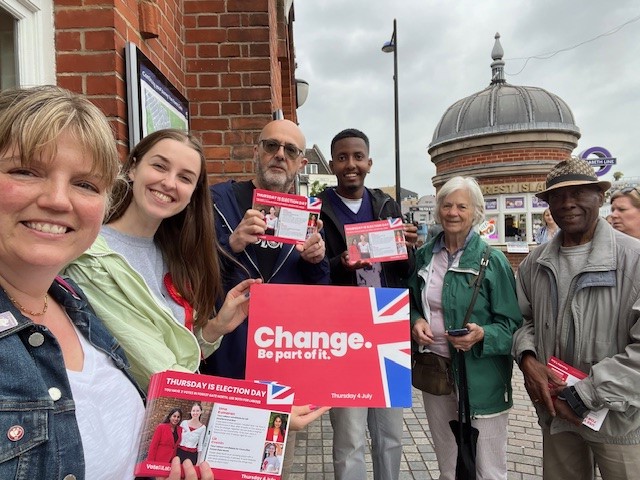
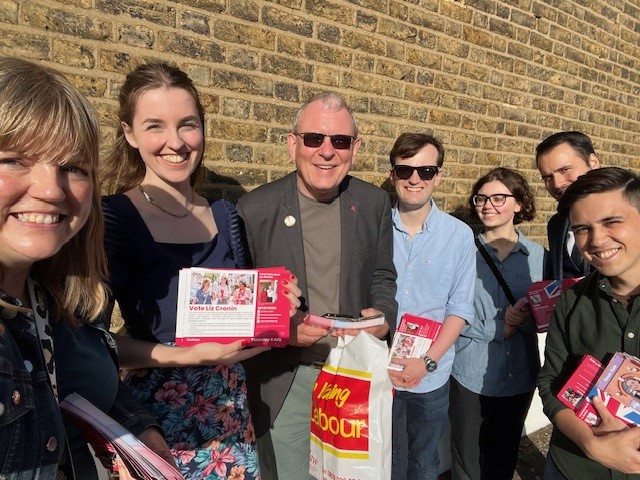
Now that the General Election is done, and we’ve had our by-election here in the ward too, I thought I would do a quick post to introduce my new colleague, Liz Cronin, who joins me as the other councillor in Forest Gate North.
We had only a few weeks to campaign but we spoke to hundreds of people on the doorstep, and door knocked almost the entire ward with just us and a trusty band of a few volunteers. Nevertheless, I thought an intro post might be useful, and wanted to start with a few ‘getting to know you’ questions.
What motivated you to stand to be a councillor?
When I first moved to Newham, mid-pandemic, I was bowled over by the sheer strength of community. People have been so welcoming; I really wanted to give back and work hard to improve people’s lives – especially those who often feel frustrated with politics! I absolutely love Forest Gate, so it’s a privilege to have been elected and have the chance use my experience (in the civil service, Parliament and now the charity sector) to serve local residents.
What do you do outside of local government?
I’m the climate change policy lead at CAFOD, the Catholic Agency for Overseas Development. This involves working to help some of the world’s poorest countries, and a lot of advocacy aimed at the UK Government to up its ambition on climate action. Outside of work you can find me in coffee shops and pubs with friends, and I love the theatre. (I just saw Hades Town – can highly recommend!)
Why did you join Labour?
I grew up in a blood-red household in Preston, so Labour’s always been part of my DNA really. I left my impartial policy adviser job in the civil service partly because I was feeling too political for it, and once I joined the party I never looked back. I fundamentally believe that we can achieve much more collectively than we can striving on our own, and that society needs fundamental changes to address its inequalities – so the Labour and trade unionism families are ones I’m proud to be part of.
What is your favourite thing about Forest Gate?
It’s a toss-up between the book stall at Woodgrange Market, and the cinnamon buns at Ramble.
How was the election campaign?
Very tiring (I definitely got my steps in). But ultimately a brilliant experience – me and the team spoke to nearly a thousand people, which gave me a great sense of what people are bothered by – but also proud of – in Forest Gate North. I’m really proud of the positive campaign we ran, focused on making our area the best it can be and showcasing our fantastic local people and organisations.
What do you plan to get involved in first, and what are your local priorities?
I’ve started speaking to council officers and my fellow councillors about what power and levers I have to make a real difference here. I’m under no illusions that local government can’t be overly bureaucratic and slow sometimes, so I want to get to grips straight away with the best ways to navigate procedures and processes to get things done. After that I want to start making some of the changes that most impact the lives of the residents I’ve spoken to: feeling safe from anti-social behaviour day and night, having cleaner streets, and a thriving high street.
I thought I’d quickly share some good news about the future of Forest Lane Park, which is that officers who have been working on getting some Heritage Lottery Funding have been successful in getting to the next stage. (I will be keeping in touch with them to make sure that residents’ ideas and views are at the centre of the design process – I know that there was a consultation meeting but also some concern about how much residents were able to take part.) For now though, some much-needed good news.
This is the email which I received:
‘I’m delighted to let you know that we have been successful in obtaining a development grant for the works to improve Forest Lane Park!
The development phase will enable us to continue to work with you all to develop final designs for the proposed improvements, we will then be required to submit another application to unlock the delivery fund of just under £1million.
There are a number of tasks that we need to complete ahead of starting work, including appointing a design team which could take until the end of this year.
I will keep you updated along the way and really look forward to working with you as we take this project forwards.’
The last council meeting, on the 18th September, was a themed meeting, on the topic of ‘A Clean Borough’. I wanted to take a moment to share some of the information from that meeting about some of the work that is being done to help make our streets cleaner.
Several years as a councillor have taught me more than I ever imagined I would know about street cleaning and I’m still very aware that there is much more to learn, and certainly plenty more to do. One thing I have definitely noticed myself, though, is that the end of the summer always feels like a bad time in terms of street cleanliness. I’ve been a councillor for nine years now, and generally I have noticed that in September a feeling of of ‘the streets are a mess and it’s worse than ever!’ descends upon everyone, including me.
I don’t necessarily have an answer as to why that is, but I do have some ideas. Fly tipping and rubbish always increase when the weather is warm, and we all spend more time outside… and of course extra time spent outdoors means that we all notice the rubbish more. I imagine that like the rest of us, street cleansing officers take proportionately more leave during the summer. Weeds on pavements (on which more later) grow furiously over the summer, which both increases the impression of mess, and also can ‘catch’ litter and rubbish and make it hang around for longer.
The last time I blogged in a substantial way on street cleansing was here, when I’d had a flurry of casework and was keen to understand a bit more about what was happening in the service. That post outlined various plans to make structural and organisational changes to street cleaning, the kind of work that takes a while and is frustratingly ‘behind the scenes’, but which is vital to making a more modern and efficient service. I was pleased to look back and see that although some progress was delayed by factors like the refuse strike, others have progressed and are now in place.
So I turned to my colleague James Asser’s speech from Council, where he gave an update on various bits of work that have been done, or are being done, and thought I’d summarise some of that here.
Work already done:
Brought street-cleaning services back in-house in a single borough-wide service. Invested in new uniforms for staff Invested in new street-cleaning equipment to make the frontline staff’s work easier and more effective Invested in new drain cleaning equipment New gum busting kit to clean our pavements New bin lorries, that will be more reliable and have modern electric bin lifts to reduce the noise during collections. Expanded the amount of waste that can be recycled Removed the worst fly-tipped recycling points and are investing in the remaining ones to make them tidier and cleaner
Work underway:
Rolled out a new revised street-cleaning strategy with new rounds and new ways of working (this is happening now) Bringing in new vehicles for gritting and tackling winter conditions on pavement and bike lanes Additional vehicles to meet growing demand on the waste service Modernising our mechanical sweepers Moving to weekly recycling collections to meet our commitment to increase the amount we recycle and meet the resident demands for more recycling opportunities. Changing collection of waste from flats above shops to reduce the waste and time it is left on high streets
As well as those, James also mentioned the work LBN is doing jointly with Keep Britain Tidy on the Better Streets project (which you can read about in more detail here), and a new borough-wide approach to fly tipping on private land. Regular correspondents with me about fly tipping may be aware of the frustrations that previously occurred when a fly tip was on land that is privately owned, for example a forecourt in front of a building. Often reports on the Love Clean Streets app would be marked ‘closed’ whilst officers at the Council contacted the landlord, but in the meantime the fly tip remained, sometimes attracting more rubbish. Now, we are now clearing these areas anyway and then working with the landowner on costs, speeding up the clearance rates on privately owned public areas.
Another project that I mentioned in my post last year was the commissioning of an external contract for Enforcement, and that has also happened, with a company called Kingdom now providing additional resources to issue Fixed Penalty Notices against people fly tipping and littering. You can read a bit more about that here.
If this information has whetted your appetite and you’d like more, you can read the substantive paper that went to Council here. You can also read the really excellent research done by Keep Britain Tidy (which has driven and informed so much of our work in Newham since we started working with them in 2018) ‘Beyond the Tipping Point‘. I might blog about this research separately as it’s so illuminating about the factors that contribute to fly tipping and gives a really helpful UK-wide perspective.
I was pleased to see that inspecting our street cleanliness and reporting on it is now, as promised, not done by Council officer but has been outsourced to Keep Britain Tidy. This means we’re not ‘marking our own homework’ (though actually, previously going out on a street inspection visit with a Council officer was very reassuring in terms of seeing how rigorous he was!) and gives us some really robust data to track how things are changing over time. The stats show an improvement. Honestly, I am not sure we’re quite seeing or feeling that in Forest Gate North at the moment, but that combined with all the other work happening does make me feel cautiously optimistic for the future.
I need to finish by saying that of course I’m not complacent. Litter and fly tipping continue to be one of the most common issues that residents contact me about, and as the excellent research from Keep Britain Tidy showed us, they are thorny problems with no easy solution. Our streets in Forest Gate North are a wonderful and frustrating mix of the best and worst of Newham: peaceful low traffic neighbourhoods, speeding vehicles, healthy school streets, careless drivers endangering people on bikes and pedestrians, re-surfaced pavements smoother and perfect for scooters and wheelchairs, road surfaces blighted with pot holes, new and old small businesses lighting up the high street, recently empty shops, people improving our streets with projects and litter picks, and other people dumping their rubbish without a thought. Of course 13 long years of austerity are a hugely important factor here, with council services along with all public services visibly hanging by a thread after years of Tory government. Along with Sasha, I’ll carry on doing my best to improve things, and will always try to be honest and up front about what we can achieve, and what we hope for.
I was doing some casework today concerning an elderly resident and some maintenance of their home, and received information about some available support from the local voluntary sector. This seemed so helpful that I thought I’d share it here on the blog.
Obviously I can’t make any guarantees about these organisations or what they are able to offer, or what their capacity or eligibility criteria are. But if you are an older person, a homeowner, and struggling with how to get maintenance done on your home then do drop the organisations below a line to explore whether they can help.
GoodGym Goodgym already do lots of great work in the area (I was recently reading about their work in the UP garden), but they also have DBS checked volunteers who help with one off tasks such as changing lightbulbs; smoke alarm batteries, moving small pieces of furniture; hanging curtains, gardening. They have a list of the things they can and can’t do.
Helping Hands Volunteers can help with gardening and small jobs around the home. Phone: 0207 474 1122 HH42balaam@aol.com
If you, or a friend or neighbour might benefit from this, do get in touch. And update me if anything I have shared above is incorrect or becomes out of date.
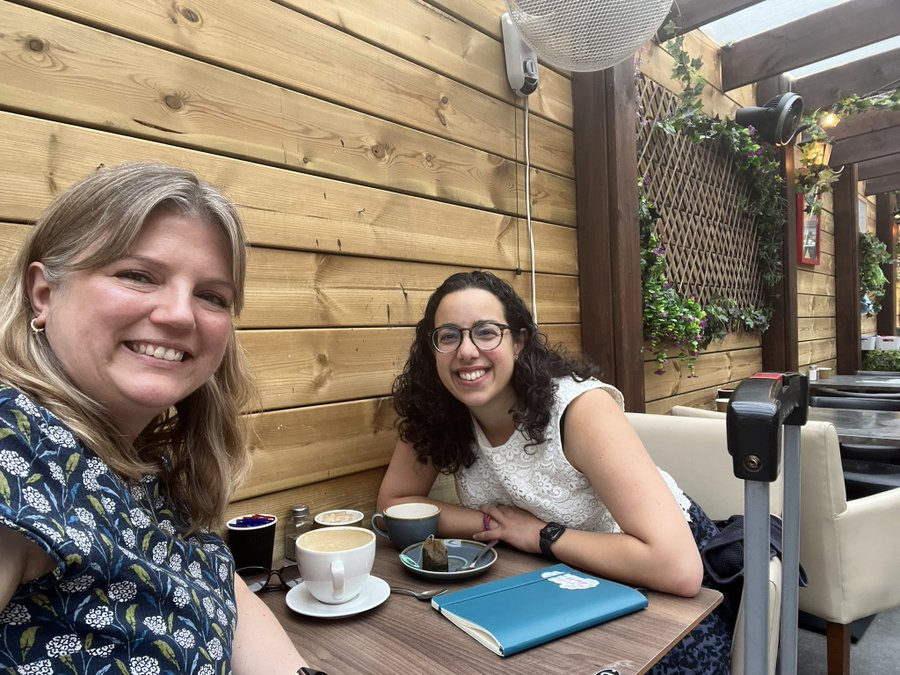
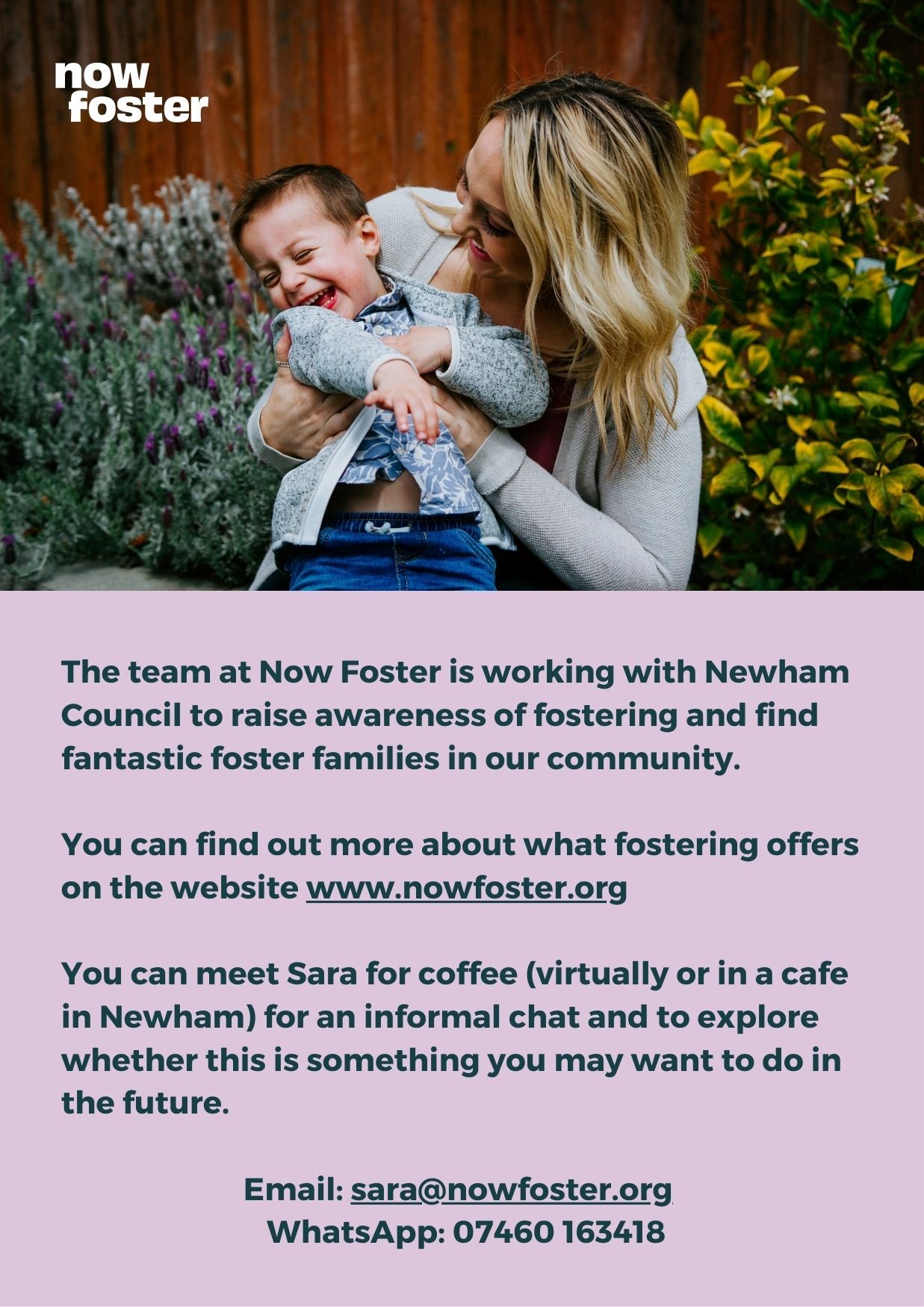
Recently I met with Sara Fernandez from an organisation called Now Foster, who are working with Newham to encourage more people to become foster carers. Quite apart from being very friendly and entertaining, she spoke so persuasively about needing to recruit a wider range of people, about how Forest Gate might be a place where there is some untapped potential, and how many carers are needed.
She made a point that really stuck with me: over a thousand households in Newham had volunteered to host Ukrainian families as part of the government scheme. These people were obviously socially motivated to help, and had space in their homes – could they perhaps consider being foster carers? This compares very starkly with the very small number of new foster carers who were recruited last year, perhaps because lots of people don’t consider themselves to be ‘right’ for fostering, or perhaps because it just doesn’t occur to them.
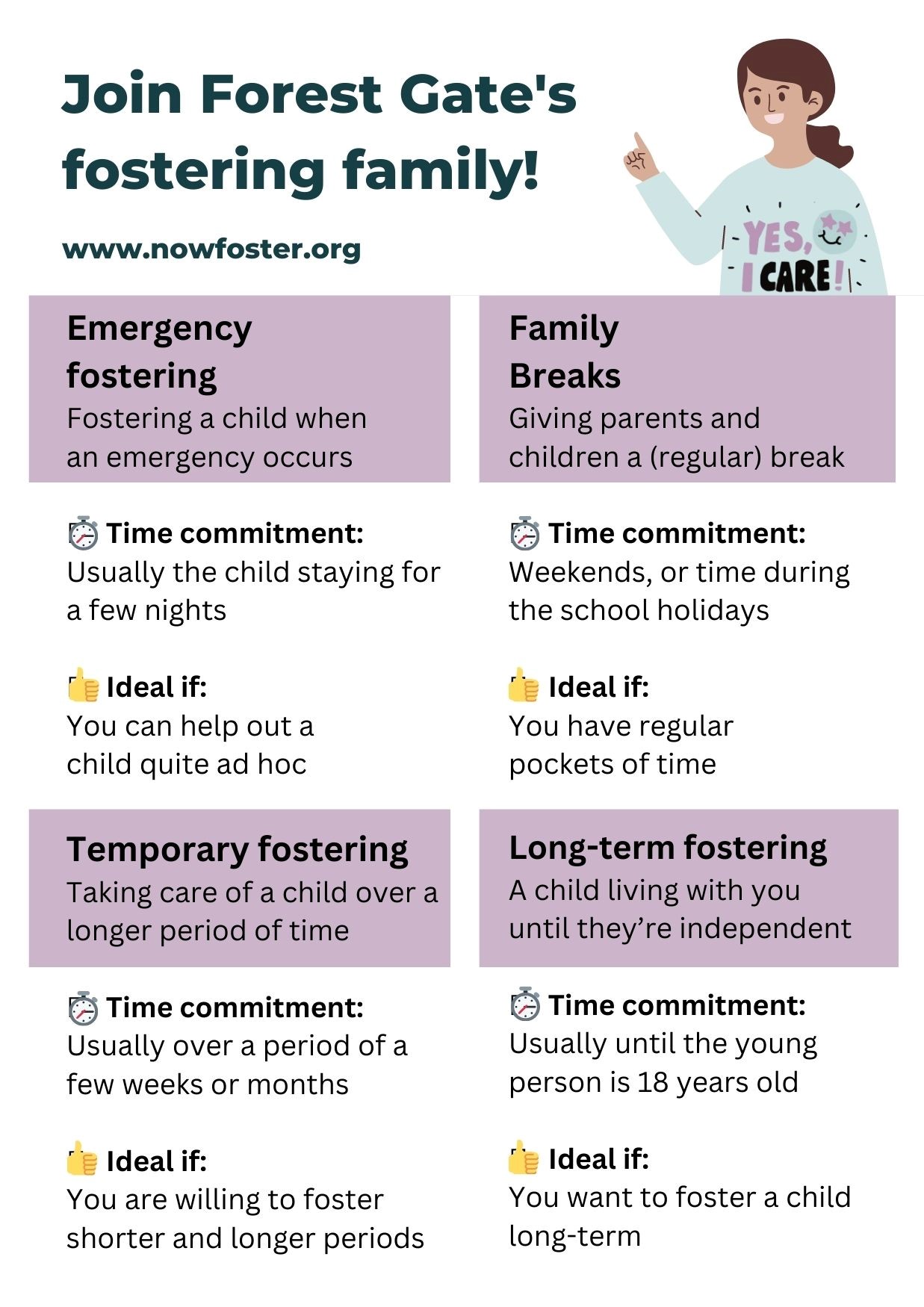
I always think of fostering as being very all-encompassing and long term, so was really interested to read about the different types of of fostering, including family breaks which can be quite short periods. Sara said it’s a myth that you have to be not working, or that people who already have families cannot foster. In fact, she said that families with young children may find they are a good fit for an older teenager, and conversely families with teenagers could be a great foster home for a younger child. She is also very keen to recruit more LGBTQ+ foster carers.
Sara and others have been door knocking and will be coming along to some of our lovely summer community events in Forest Gate to meet people and talk to us about fostering and how to get involved.
They are also holding a Fostering Pizza evening with our good friends at Tracks, where you can come along in an informal environment, have a slice of pizza and talk through any questions you have. If there is even a small question mark in your mind as to whether you might be able to foster, do come along. All the information is on this link here:
You can meet Sara for coffee (virtually or in a cafe in Newham) for an informal chat and to explore whether this is something you may want to do in the future.
One thing that has come up a few times is the question about a permits system for local residents, and this made me think that it might be useful to spend some time writing a blog post about the different types of ‘filters’ that can prevent through traffic, as each has its own pros and cons.
If you’re new to the idea of a Low Traffic Neighbourhood, you can read my blog post about them here, which introduces the concept.
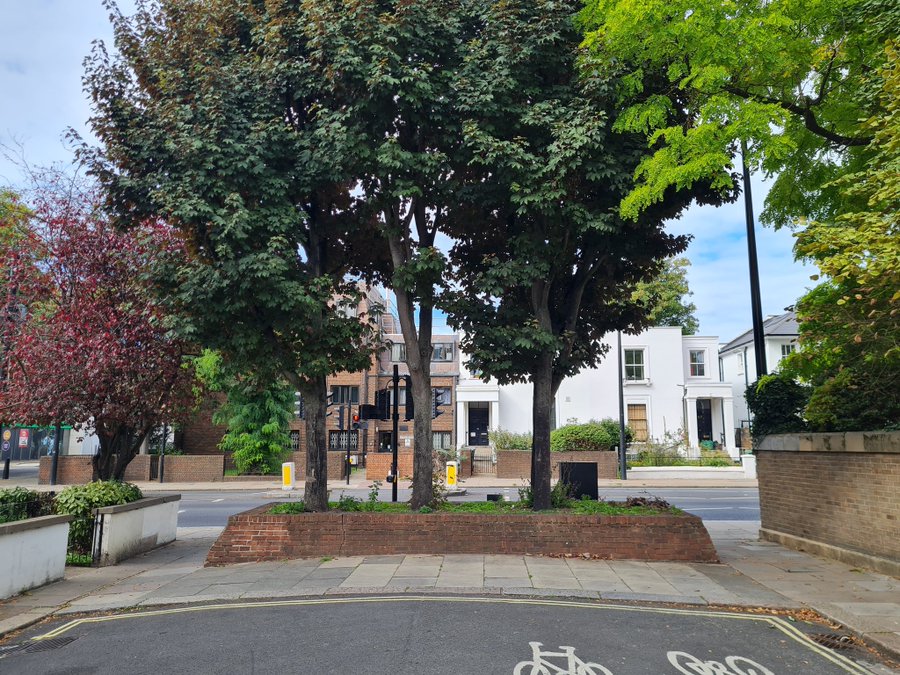
A ‘filter’ or ‘modal filter’ is so-called, as I belatedly realised, because it filters the types of movement it allows through it. The most common LTN filters will filter the through traffic to allow people on foot, travelling by wheelchair, or people riding bicycles to move through them freely, but restrict motor vehicles to other routes, largely on main roads where possible.
The ultimate filter: cul-de-sacs
Maybe I am being a bit facetious here – people don’t normally consider cul-de-sacs modal filters. But actually part of the reason Newham scores relatively highly on some assessments for healthy streets is that our ‘LTN’ percentage is strangely high, which I believe is due to the cul-de-sacs that make up some of Beckton (as well as a number of our older housing estates that were designed originally not to allow through traffic, effectively along LTN principles).
The ultimate filter to through-traffic is a road designed as a cul-de-sac. The only vehicles within this dead-end will be those who belong to people who live there, or those that are specifically visiting those addresses. There is one way in, and one way out. Modern transport planning doesn’t tend to create cul-de-sacs for a variety of reasons, but I think that one of them is that they’re not particularly friendly to walkers. You might live geographically very close to a house in a neighbouring cul-de-sac, but have to walk all the way out of yours, onto the main road, and back into the next one in order to visit them ( to illustrate this to Forest Gates, for example if you live at the end of Curwen Avenue in Forest Gate, the homes on Horace Road are mere seconds away from you as the crow flies, but if you’re not a crow, walking there will take you the opposite way back out onto Woodford Road first.)
Fixed bollards / physical blockages
There are lots of these kinds of filters around, and I sometimes refer to the older ones as ‘invisible filters’ because once they have been in place for a while, people tend not to even notice that they are there, but just adjust how they move around them. At the end of the proposed Capel LTN is a filter on Anna Neagle Close / Brownlow Road, and in 8 years of being a councillor I have received precisely no requests that this should be opened back up to vehicles. In fact, quite the opposite: we had to install an extra bollard when it turned out some cars were squeezing up onto the pavement and illegally driving through.
Other older filters that local readers might recognise: Richmond Road E7, the junction of McGrath Road and Forest Lane, Buxton Road E7, and there is a whole twitter thread including many more, which my friend and colleague John Morris posts here:
The benefits of a complete physical block are that they make the most difference to the quietness of the streets behind it. On roads that were previously busy with traffic cutting through, they create a real sea change: the volume of traffic drops so significantly that pedestrians, instinctively, know they are safer and will behave differently on the road. Children might play on it, more nervous or vulnerable people on bikes might cycle on the road rather than the pavement. People might walk down the middle of it. I’m sure there’s some good research somewhere about traffic volumes and behaviour change, but in order for people on foot and particularly more vulnerable road users to physically reclaim a street for walking, there needs to be a real quietness that you can not just count, but feel.
Another benefit is that the physical barrier can take many forms. A common one for more recent or for experimental filters is a wooden planter, which can contain plants to encourage pollinators and small trees. More established filters can include a physical ‘build-out’ into the road, with bicycle parking, a pocket park, tree planting, planting for better drainage to reduce flooding risk, or more.
The downside of this kind of filter is that the physical restriction is absolute. Some older filters only have narrow spaces that some adapted bicycles or cargo bikes cannot get through. People carrying a larger load on a bike might need to squish past older bollards. Emergency services vehicles also cannot get through and will need to use the usual access points.
Lockable bollards
Some filters have bollards across the road which are padlocked in place, and can be opened with a key by emergency services for fast access.
The advantage here is pretty obvious: emergency services vehicles that cannot take the normal route into the road can open up the filter, and gain access more quickly if needed. So you get all of the radical advantages above of much quieter roads too. That is, until..
The major ‘con’ here is vandalism and misuse. One local locked bollard filter is unlocked and the bollard moved so frequently that a local resident appointed herself as an unofficial bollard watchperson and emails me to let me know whenever it happens. It seems that someone nearby somehow got hold of one of the keys, and was unlocking the bollard whenever they wanted to drive through, in effect creating their own one-person exemption scheme. Every time a padlock is lost / the bollard is damaged / the bollard is lost, then someone is dispatched from Highways to fix it, which all comes at a cost that we all pay for through our Council tax.
Another downside, although not a game changer, is that in contrast to pocket parks, and trees as above, metal bollards are not desperately attractive, and aren’t as positive an addition to the local environment. (There are some filters that combine the two, with some planting, and perhaps one removeable bollard in the middle, and to a certain extent overcome this last drawback.)
‘Open’ filters – camera enforced
This kind of filter is a legal restriction on access at a certain point, combined with signage, perhaps with something like a planter providing a part-barrier in the road as a visual reminder, and with an ANPR camera installed to issue tickets to those people in cars who drive through anyway.
The benefit of this is that it does allow some access for, eg, refuse vehicles or emergency services vehicles (see more about exemptions below). I’m personally instinctively not as in favour of these types of filters, for a few reasons.
The main one is that people in cars and other vehicles will SO consistently ignore or misunderstand the signage, no matter how much there is, and simply drive through. Of course every vehicle in contravention will provide some revenue, which can be used for more road improvements. But ultimately the purpose of these kinds of schemes is actually to create safer places, and to encourage walking and cycling, not to raise money. And these aims are not achieved when cars simply drive through junctions that have been identified as modal filters to be closed to through traffic. The roads that should be much quieter are less quiet. People driving through filters either knowingly or in error are more cross because they believe they have been duped into getting tickets. It’s less safe to walk and cycle. Every vehicle that gets a ticket weakens the success of the scheme.
But that said, liaising with people including the emergency services is an important part of designing any LTN. And sometimes people from the fire service, police and ambulance service prefer these kinds of modal filters, or require them in particular locations, so I do recognise that in many places these are the best that we can do, and still do make a difference.
‘Open’ filters with exemptions
Some modal filters have some exemptions. These vary considerably, even within London, from borough to borough and from location to location. But to give an idea, exemptions could include refuse trucks (often exempted because they are such large vehicles with large ‘turning circles’), emergency services vehicles, black cabs, all private hire vehicles, blue badge holders who are local residents, all blue badge holders, local residents of that road who own a car, or local residents who own a car within a certain distance of the filter. I’ve also heard people advocate for (although I don’t think I’ve seen these in place) exemptions for all NHS workers, for community NHS workers, care workers, public sector workers, tradespeople, people who work in the area, and other groups.
As you might be able to tell from the list above, one of the main disadvantages to issuing permits or exemptions is deciding who should get them. There are arguments for and against each of the groups above, some very passionately held, and including any group in an exemption does strengthen the argument that other people should also be exempt.
This then in turn adds to the disadvantage above: the more vehicles that are exempt, the more diluted the impact of the scheme is.
But specifically in terms of permits for local residents, I think there are some additional factors to consider. LTNs have two main aims, which are really nicely laid out in the leaflet that went to all homes within these proposals.
‘Key objectives
The primary project objectives are in line with broader Newham Council policies.
OBJECTIVE 1 – Remove through traffic
To create a safe environment that has low levels of motorised traffic, where the widest range of people feel comfortable walking and cycling.
OBJECTIVE 2 – Encourage modal shift
To encourage people to walk and cycle for local trips, rather than drive.’
‘Woodgrange and Capel Low Traffic Neighbourhood, Jan 2023, London Borough of Newham
Permits for local residents who own cars means that there is no necessity for people living within the LTN to change how they move around. Without permits, as per the LTN design and intentions, people living within as well as outside the LTN can still access anywhere they want to by car, but they might have to change the route they choose to get there. With permits, people inside the LTN who own cars can carry on as before, and the onus to change behaviour falls only on those outside it. I worry about this in terms of community cohesion, and think any barrier created between people eligible for permits and those not could be very damaging and divisive*.
I speak from some experience, although not in my ward. When local councillors, the Mayor, and others (including me, in my then role which included Highways across Newham) looked at huge problems caused on Stanley Road in East Ham by volumes of traffic that the road was never designed for, we realised that closing Browning Road bridge to through traffic would in effect create a mini LTN in the area bounded by Shakespeare Crescent. A system of permit exemptions for local residents was agreed, and was enormously controversial. In fact, a protest on the day of opening resulted in an extension of the exemption area, and even now the closure is constantly ignored by drivers who are then fined, and is cited in unfavourable news articles as being a ‘cash cow’ – precisely for all the reasons I have outlined above.
I also suspect that exemptions existing for this Browning Road filter contribute to some confusion: that other drivers see someone driving through, think to themselves, ‘oh it must be ok’, drive through themselves and then get a fine.
There are of course exemptions available for residents who live on school streets, but this is is somewhat different, because without those local permits, people who live on school streets who own a car would be completely unable to use it during the times of the closure. The overall impact on the school street is small because the area of closure is small, and so the volume of entirely local traffic is very small, meaning that the streets are used by parents, carers and children to walk and cycle, and cars proceed only occasionally and with caution. Just as a reminder, within an LTN every home and business is still accessible by car, it just might require someone arriving by car to change their route. (If this isn’t the case, then please let highways know.)
Another important point is something that the officers pointed out to me when designing this LTN, and weighing up different filter locations: there is a direct trade-off for local residents between how close they live to a filter and the extent of the benefits they will experience. Some residents with cars who live very close to a filter may experience more disadvantage as they need to change their preferred route more, but the corollary to this is that they also experience maximum benefit as their road, and indeed their part of the road, is particularly quiet, pleasant and safe.
I also do want to add, again that not all Newham residents own cars. Providing exemptions for those that do would dilute the benefits for everyone, including those who do not have a car (who are more likely to be poorer residents). Although car ownership is higher within these two proposed LTNs than elsewhere in Newham, I think that the higher levels of car ownership is even more of a reason to create LTNs that encourage all car owners, including me and my family, to use their cars less whenever it’s possible to do so.
So all this to say that although I am personally somewhat persuadable, depending on location, about the merits of fixed or open filters, I am on balance not in favour of exemptions for local residents. Not that this decision rests with me! I wouldn’t want to give that impression. As a local councillor I’m consulted by highways about the process, and will feed into it, represent local insights and concerns, and advocate for the area, but I don’t and wouldn’t expect to have a final say on the scheme overall or on any details from it. But I hope that this post has given an insight into my starting point, where I am coming from, and why.
*Talking of divides, I have heard some people say that they think LTNs create divides, and I am not sure that my experience bears this out. I currently live just outside one of our existing LTNS, which has been in place for a couple of years now. In fact, if anything that area is much more porous and accessible to me now than it was before. I travel through there by bike much more often, walk more often too, and visit local businesses in there more now that the roads are so markedly quiet. I’m always keen to understand more about how we make streets healthier, and I’m very open to understanding upsides and downsides, but I know that research backs me up on this: people know their neighbours more, and make more local connections on streets that have less traffic.
This is the blog of Rachel Tripp, a Labour councillor for Forest Gate North in the London Borough of Newham.
First created as a joint blog with colleagues Ellie Robinson and Seyi Akiwowo, Rachel has now taken it over to post updates and information including ward reports, events, meetings, and anything else that might be interesting.
I hope that you find it useful; please get in touch and let me know what you think.





 Forest Gate North - Rachel Tripp's councillor blog